Diplomatic Law and Consular Services
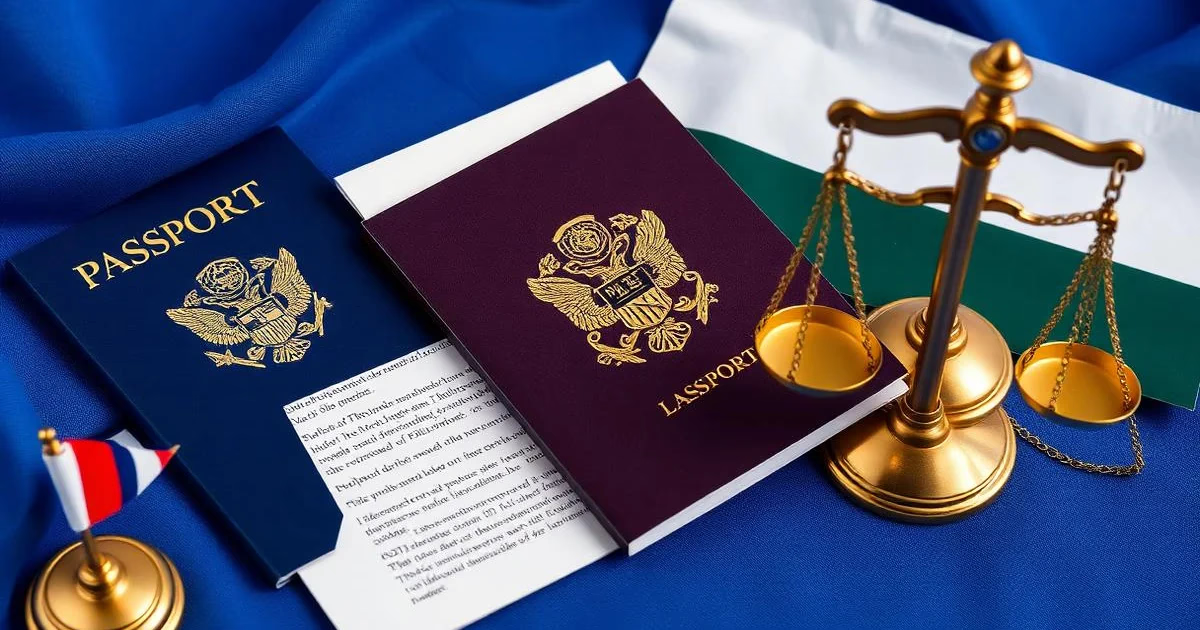
Summary: Introduction to Consular Law While diplomatic relations focus on state-to-state political affairs, consular relations address practical matters affec...
Introduction to Consular Law
While diplomatic relations focus on state-to-state political affairs, consular relations address practical matters affecting individuals—citizens abroad, commerce, and administrative services. Consular law provides the framework for these essential functions.
The primary legal instrument is the Vienna Convention on Consular Relations (VCCR) of 1963, to which Turkey is a party.
Diplomatic vs. Consular Functions
Diplomatic Functions
Embassies and diplomatic staff focus on:
- Political relations between states
- Negotiating treaties
- Representing state interests
- Formal communications between governments
Consular Functions
Consulates and consular officers focus on:
- Services to citizens abroad
- Protection of nationals
- Commercial and trade matters
- Administrative services (passports, visas, notarial acts)
Vienna Convention on Consular Relations (1963)
Overview
The VCCR:
- Codifies customary international law on consular relations
- Establishes consular functions and privileges
- Sets rules for consular posts and officers
- Defines obligations of receiving states
Key Provisions
- Article 5: List of consular functions
- Article 36: Right of access to detained nationals
- Article 41: Personal inviolability (limited)
- Article 43: Immunity for official acts
Consular Functions
Protection of Nationals (Article 5)
The core consular function is protecting citizens abroad:
- Assisting nationals in distress
- Visiting detained or imprisoned citizens
- Ensuring fair treatment in legal proceedings
- Providing emergency assistance
Administrative Services
Consular posts provide:
Travel Documents:
- Passport issuance and renewal
- Travel documents for return home
- Emergency travel certificates
Civil Registration:
- Birth registration for nationals abroad
- Death certificates
- Marriage registration
Notarial Services:
- Authentication of documents
- Administration of oaths
- Certification of signatures
Legal Assistance:
- Providing lists of local attorneys
- Explaining local legal procedures
- Transmitting judicial documents
Commercial and Trade Functions
Consulates promote economic relations:
- Assisting businesses with trade matters
- Providing commercial information
- Supporting investment activities
- Issuing commercial invoices and certificates of origin
Visa Services
Consular posts process visa applications for:
- Tourism visits
- Business travel
- Study programs
- Work permits
- Immigration matters
Consular Access to Detained Nationals
Article 36 Rights
The VCCR establishes important rights regarding detained foreign nationals:
1. Notification Right (Article 36(1)(b)): If requested, the receiving state must notify the consulate when a national is arrested or detained.
2. Right to Communicate: Consular officers have the right to communicate with and access detained nationals.
3. Right to Visit: Consular officers may visit nationals in prison, custody, or detention.
4. Right to Arrange Representation: Consulates may arrange legal representation (though they cannot provide it directly).
Practical Importance
These rights are crucial for:
- Ensuring fair treatment
- Monitoring conditions of detention
- Facilitating legal defense
- Providing emotional support and contact with family
ICJ Jurisprudence
The International Court of Justice has addressed Article 36 violations in several cases:
- LaGrand Case (Germany v. USA, 2001)
- Avena Case (Mexico v. USA, 2004)
- Obligation to inform detainees of their consular rights
Consular Privileges and Immunities
Compared to Diplomatic Immunity
Consular immunity is more limited than diplomatic immunity:
| Aspect | Diplomatic Agents | Consular Officers |
|---|---|---|
| Criminal immunity | Absolute | Official acts only |
| Arrest | Cannot be arrested | Can be arrested for grave crimes |
| Premises inviolability | Absolute | Not absolute in emergencies |
| Testimony | Cannot be compelled | May be compelled (not on official matters) |
Personal Inviolability (Article 41)
Consular officers:
- Are not liable to arrest or detention pending trial, except for grave crimes
- Are exempt from jurisdiction for official acts
- May be required to attend court as witnesses (but not regarding official functions)
Premises (Article 31)
Consular premises:
- Generally protected from entry by authorities
- May be entered in case of fire or other emergency with consent (or presumed consent)
- Are not absolutely inviolable like diplomatic premises
Archives (Article 33)
Consular archives and documents are inviolable at all times and wherever located.
Turkish Consular Services
Consular Network
Turkey maintains an extensive consular network including:
- Consulates General in major world cities
- Consulates in smaller cities with significant Turkish populations
- Honorary consulates in additional locations
Services for Turkish Citizens
Turkish consulates provide:
- Passport and travel document services
- Civil registration (birth, marriage, death)
- Military service postponement
- Inheritance matters
- Assistance to Turks in distress
Services for Foreigners
Turkish consulates in Turkey provide services to foreign nationals, including:
- Visa processing
- Residence permit guidance
- Business and investment information
Emergency Consular Assistance
Situations Covered
Consulates may assist in:
- Medical emergencies: Referral to hospitals, contact with family
- Accidents: Coordination with local authorities
- Crime victims: Assistance with police, referral to Attorneys
- Natural disasters: Evacuation coordination
- Death abroad: Repatriation of remains
- Destitution: Emergency financial assistance (loans)
Limitations
Consulates cannot:
- Provide legal advice or representation
- Pay for services (except emergency loans)
- Intervene in judicial proceedings
- Get citizens released from legal custody
- Investigate crimes (this is for local police)
Consular Fees
Most consular services involve fees, set by:
- National regulations
- Bilateral agreements
- Cost-recovery principles
Some emergency services may be provided on a loan basis, with reimbursement expected.
Honorary Consuls
Many countries appoint honorary consuls—local residents who perform limited consular functions:
- Usually business people or community leaders
- Have fewer privileges and immunities
- Assist with administrative services
- Support the career consular service
Legal Assistance: We provide guidance on matters involving consular law, protection of citizens abroad, and related international legal issues. Contact us for international law expertise.
Professional Legal Support
Contact us for professional legal assistance on this matter.
📞 Call Now: +90 554 192 47 20
📧 Email: info@avukatfevziyaskir.com
📍 Address: Opposite the Courthouse, Karatay/Konya, Turkey
⚖️ Attorney Fevzi Yaşkir - Licensed attorney at Konya Bar Association providing legal consultation and case management services for international clients.
Expert Legal Support
Need professional legal advice regarding Diplomatic Law and Consular Services? We are here to protect your rights and manage the process correctly.
Related Articles and Links
These links are suggested for additional information related to your topic

Att. Fevzi Yaşkır
Founding Attorney
Fevzi Yaşkır, registered with the Konya Bar Association, practices in Criminal Law, Family Law, Labor Law, and Enforcement Law. He is committed to defending his clients' rights at the highest level.