Buying Property in Turkey 2026: The Ultimate Guide for Foreigners
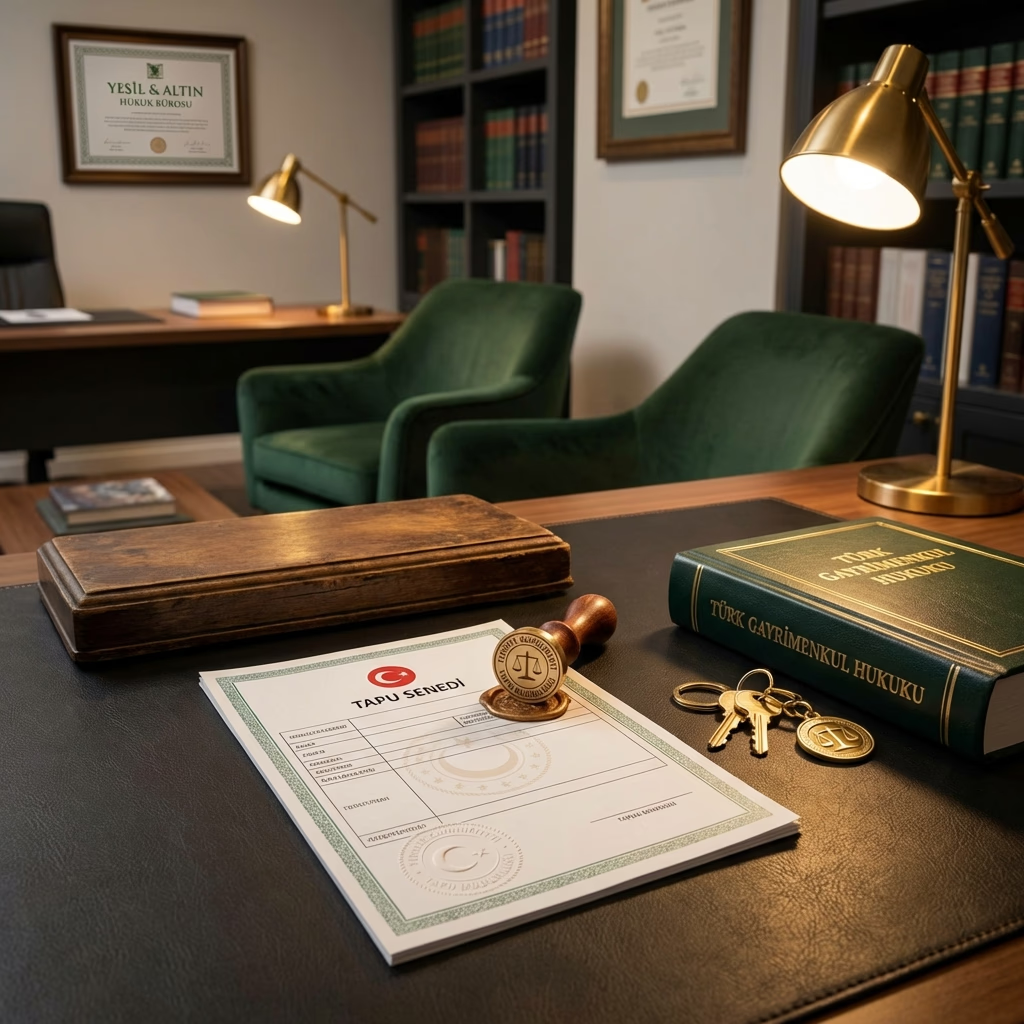
Summary: A to Z Guide for Foreigners buying real estate in Turkey. 2026 Rules on 'DAB' Certificate, Military Clearance, Valuation Reports, and Safe Payment Methods.
Turkey remains one of the most attractive real estate markets in the world for foreign investors. Whether you are looking for a holiday home in Antalya, an investment apartment in Istanbul, or a factory land in Konya, the “Title Deed” (Tapu) system is secure and state-guaranteed.
However, the purchase process for foreigners is NOT the same as for Turkish citizens. There are specific bureaucratic hurdles—like the DAB Certificate, Appraisal Report requirements, and Military Zone Checks—that can derail a sale if ignored.
This guide outlines exactly how to buy property safely in 2026 without falling into common traps.
1. Can Foreigners Buy Property? (The Principles)
Generally, YES. Citizens of 183 countries can buy property in Turkey. You do NOT need a residence permit to buy property.
Restrictions (The Red Lines):
- 30 Hectare Limit: A foreigner cannot own more than 30 hectares of land in total.
- Military Zones: You cannot buy property in “Military Forbidden Zones” or “Security Zones”. (This requires a background check).
- 10% Rule: Foreigners cannot own more than 10% of the private land in a specific district (Ilçe). (Some districts in Istanbul and Antalya are occasionally closed due to this density).
- Agricultural Land: If you buy a field (Tarla), you must promise to develop an “Agricultural Project” within 2 years. If you don’t, the state can force-sell it. Investing in “Zoned Land” (Arsa) is safer.
2. The 2026 Mandatory Documents
You cannot just walk into the Tapu office with cash. You need to prepare:
A. The “DAB” (Döviz Alım Belgesi)
Since 2022, foreigners must sell their foreign currency (USD/EUR) to the Central Bank of Turkey before the purchase.
- Process: You send USD/EUR to a Turkish Bank -> The Bank sells it to the Central Bank -> The Bank issues the DAB Certificate.
- Rule: The Sale Value on the Title Deed MUST match (or be lower than) the DAB amount. You cannot use TL directly without this swap.
B. Real Estate Appraisal Report (Ekspertiz Raporu)
To prevent tax evasion and fraud (selling a $50k house for $400k for citizenship), the government requires a SPK-Licensed Appraisal Report.
- Validity: The report is valid for 3 months.
- Crucial: The declared price on the Tapu cannot be significantly lower than the Appraised Value.
3. The Purchase Process: Step-by-Step
Step 1: Preliminary Sales Contract (Notary)
Never pay a deposit on a handshake. Sign a “Propety Sales Promise Agreement” (Taşınmaz Satış Vaadi Sözleşmesi) at the Notary.
[!WARNING] Notary Required
A contract signed only with a Real Estate Agent is NOT LEGALLY BINDING for title transfer. It only proves you paid money, but it doesn’t guarantee the house. Only Notarized contracts are valid.
Step 2: Military/Intelligence Check
Your Attorney applies to the Land Registry. They send your details to the Military/Intel authorities to confirm the land is not in a forbidden zone.
- Time: Usually instant (automated map system) in cities, but can take 2-4 weeks in rural areas.
Step 3: Bank Transfer & DAB
You transfer the funds. NEVER bring cash in a suitcase. Always use bank transfers with the description: “Payment for Property purchase Block X Apt Y”. This is vital for your “Citizenship Application” later.
Step 4: Title Deed Transfer (Tapu Day)
Both buyer and seller go to the Land Registry Directorate (Tapu Müdürlüğü).
- Translator: If you don’t speak Turkish, a Sworn Translator MUST be present.
- Signature: You sign the official ledger.
- Result: You get the “Tapu Senedi” (Title Deed). It is the ultimate proof of ownership.
4. Purchasing Costs (2026)
Budget for an extra 6% to 8% on top of the property price.
- Purchase Tax (Title Deed Fee): 4% of the declared value. (Legally shared 2% Buyer + 2% Seller, but in practice, Buyer usually pays all 4%).
- VAT (KDV): Usually 1%, 10% or 20% depending on the net area and type.
- Agent Fee: Standard is 2% + VAT from the Buyer.
- Revolving Fund Fee (Döner Sermaye): Approx 5,000 TL (2026).
- Appraisal Report Fee: Approx 10,000 - 15,000 TL.
5. Top 5 Traps & Mistakes Foreigners Fall Into
Trap 1: “Ipus” (Liens) and “Haciz” (Foreclosures)
The Seller shows you a clean Title Deed from 2020. But today, in 2026, there might be 5 Bank Mortgages (Ipotek) on it.
[!CAUTION] Check the TAKBIS
Your Attorney must check the CURRENT “Takidat” (Encumbrance) records in the online TAKBIS system before you pay 1 cent.
Trap 2: Buying “Under Construction” without Guarantee
You buy a project “off-plan.” The builder goes bankrupt. You are left with concrete skeleton.
- Solution: Do not buy off-plan unless the builder offers a “Bank Guarantee” or “Completion Insurance” (Bina Tamamlama Sigortası). Or, register your “Sales Promise” (Şerh) on the Land Registry immediately.
Trap 3: The “Low Price” Tax Trick
The agent says: “The house is $300k, but let’s declare $100k on Tapu to pay less tax.”
- Risk:
- If you want Citizenship later, request is denied (Minimum $400k needed).
- If you sell it in 3 years, you pay massive Capital Gains Tax.
- The Tax Office can fine you for “Tax Evasion.” ALWAYS declaring full value.
Trap 4: Paying to a “Friend” or “Agent”
Never transfer money to the Real Estate Agent or a “Cousin of the Seller.” Transfer ONLY to the IBAN of the Title Deed Owner (Name on Tapu). Otherwise, the Seller can claim “I never received payment”.
Trap 5: Not Checking “Iskan” (Habitation License)
The building looks finished, but it has no “Iskan” (Genel Iskan / Yapi Kullanim Izni).
- Consequence: It is legally a “Construction Site.” Electricity/Water bills are 50% more expensive. You might face demolition risk if it violated zoning laws. Buy only with Iskan.
6. How to Pay Safely: The “Blocked Check” (Bloke Çek)
The biggest stress: “Do I pay first, or sign first?”
- Seller: “Money first.”
- Buyer: “Sign first.”
The Solution: The Blocked Check.
- You put the money in your bank in Turkey.
- The Bank issues a “Blocked Check” addressed to the Seller.
- The money is blocked (you can’t touch it, Seller can’t touch it).
- You go to Tapu. You sign. You get the Title Deed.
- You hand the Check to the Seller right there at the desk.
- The Seller cashes it.
- Cost: Small bank fee, but 100% peace of mind.
7. FAQ for Foreign Buyers
1. Does buying property give me Residence Permit?
YES. If the property value is above $200,000 (2025 updated limit) and located in an “Open District”, you can get “Real Estate Residence Permit” (Short Term). If under $200k, you might only get “Tourist Residence” which is harder to renew.
2. Can I rent my property?
YES. But for “Short Term Rentals” (Airbnb style), you need a special license from the Ministry of Tourism and consent of ALL neighbors in the building (100% consent). Long term (1 year) is easier.
3. What happens if I die?
Turkish Inheritance Law applies. The property goes to your spouse and children. The state does NOT seize it. (However, inheritance tax applies).
Konya Real Estate Attorney
We provide “A to Z” conveyancing services. We check the property, draft the contracts, manage the DAB process, and represent you at the Title Deed office.
📞 Property Law Dept: +90 554 192 47 20
📧 Email: fevziyaskir@gmail.com
📍 Address: Nişantaş Mah. Vatan Cad. No:12/1 Selçuklu/KONYA
⚖️ Av. Fevzi Yaşkir
[!IMPORTANT] Need Expert Help?
Attorney Fevzi Yaskir and his team provide professional legal representation for foreign clients in Turkey. Contact us today for a consultation regarding your case.
Expert Legal Support
Need professional legal advice regarding Buying Property in Turkey 2026: The Ultimate Guide for Foreigners? We are here to protect your rights and manage the process correctly.
Related Articles and Links
These links are suggested for additional information related to your topic

Att. Fevzi Yaşkır
Founding Attorney
Fevzi Yaşkır, registered with the Konya Bar Association, practices in Criminal Law, Family Law, Labor Law, and Enforcement Law. He is committed to defending his clients' rights at the highest level.